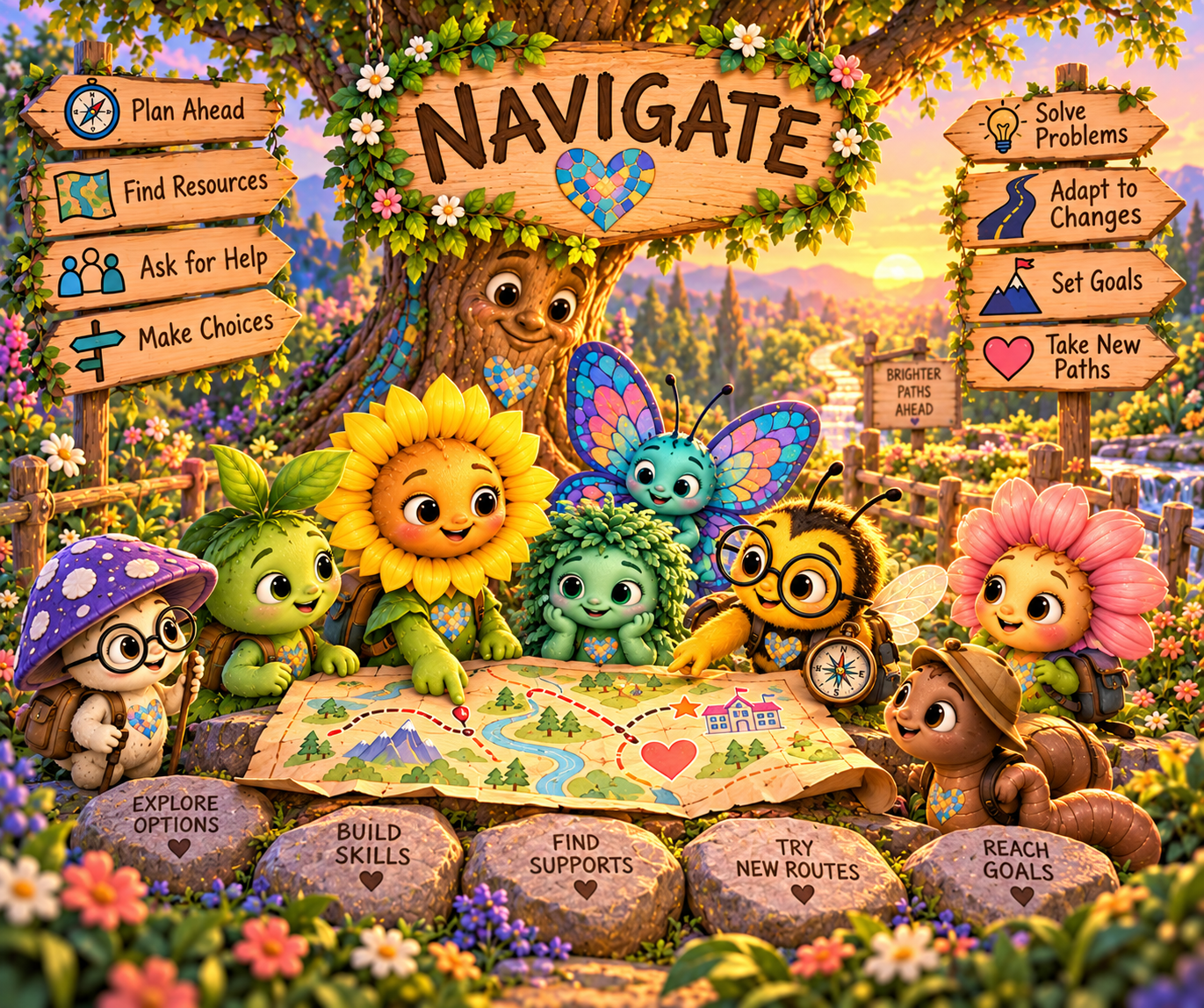

How We Help
Different needs. Connected support.
Everyday life asks us to communicate, manage change, understand information, and navigate unfamiliar places. Sometimes, the right support makes those experiences more accessible.
MoZaiX brings together family coaching, advocacy, visual communication, sensory environments, education, and community partnerships.
We begin with the person—their strengths, preferences, communication, and goals—and ask:
What do they need to access this experience?
Explore our four areas below, or book a conversation if you’re unsure where to start.
Support
Practical help for the life you’re living.
When routines become difficult or the same challenges keep returning, it can be hard to know what to change.
We help families and caregivers look at what is happening, understand possible barriers, and choose manageable next steps. Your priorities and capacity shape the plan.
Family Support & Coaching
Coaching can focus on:
Making mornings, bedtime, and other daily routines more predictable.
Preparing for transitions and changes.
Creating more ways to communicate needs and make choices.
Recognizing patterns around distress or difficult moments.
Helping caregivers respond more consistently.
Building on strengths and noticing what already works.
Together, we turn a broad concern into something specific enough to work on.
What could this look like?
A family struggling with morning transitions might begin by identifying where the routine breaks down. We could explore a visual sequence, fewer spoken directions, clearer choices, or additional processing time.
The goal is a practical starting point that fits the family.
Community Access Through the Foundation
The MoZaiX Foundation pathway is being developed to help widen access through community activities, sponsored resources, and assistance with services such as coaching or advocacy.
Program availability and assistance opportunities will be shared as they become established.
Garden guides: Sunny, the Encourager, and Oakley, the Protector.
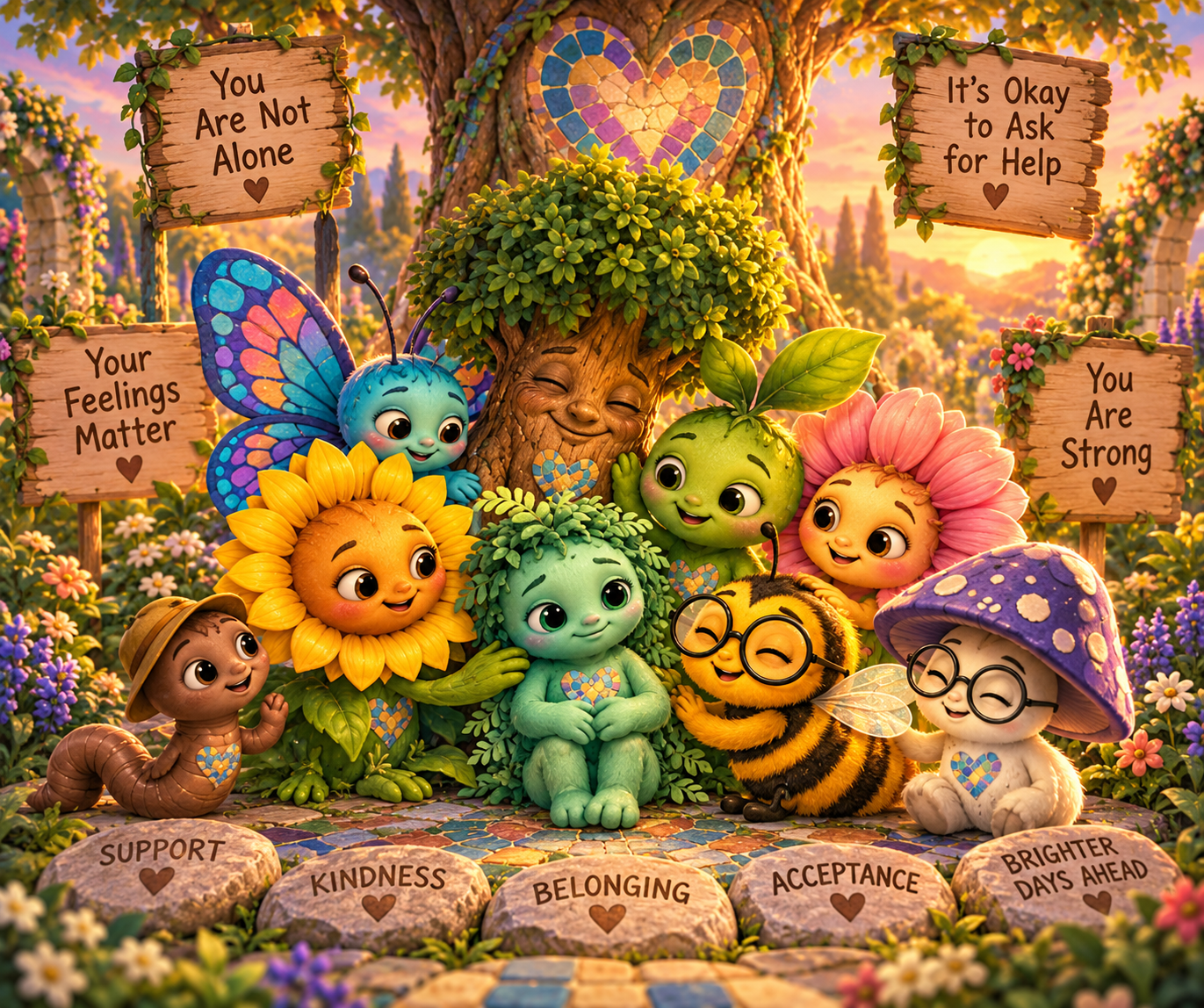
Regulate
Make room for what each person needs.
Noise, lighting, waiting, uncertainty, and personal space can affect someone’s ability to participate. We explore how the environment and the interaction can better support the person.
Regulation support includes opportunities to communicate, move, pause, and choose what helps.
Sensory Environments & Practical Supports
We welcome conversations about:
Calming areas at home, school, or in community settings.
Sensory rooms and outdoor learning gardens.
Adjustments to lighting, sound, seating, and visual clutter.
Predictable ways to enter, use, and leave a space.
Tools for requesting help, a break, or more personal space.
Helping adults recognize and respect individual preferences.
A useful space needs a plan for how people will access it and how their choices will be honored.
What could this look like?
A waiting room may be difficult because of noise, bright lighting, and an unclear wait time. A starting plan could include a quieter waiting option, a picture sequence explaining the visit, and a reliable way to request a pause.
We identify the barrier before selecting the support.
Boundaries Belong in the Plan
People need ways to express “yes,” “no,” “stop,” and “not yet.” We consider how those messages can be communicated and respected within the setting.
Specialized sensory assessment or treatment involves appropriately qualified professionals when needed.
Garden guides: Fern, the Calmer, and Spike, the Boundary Keeper.
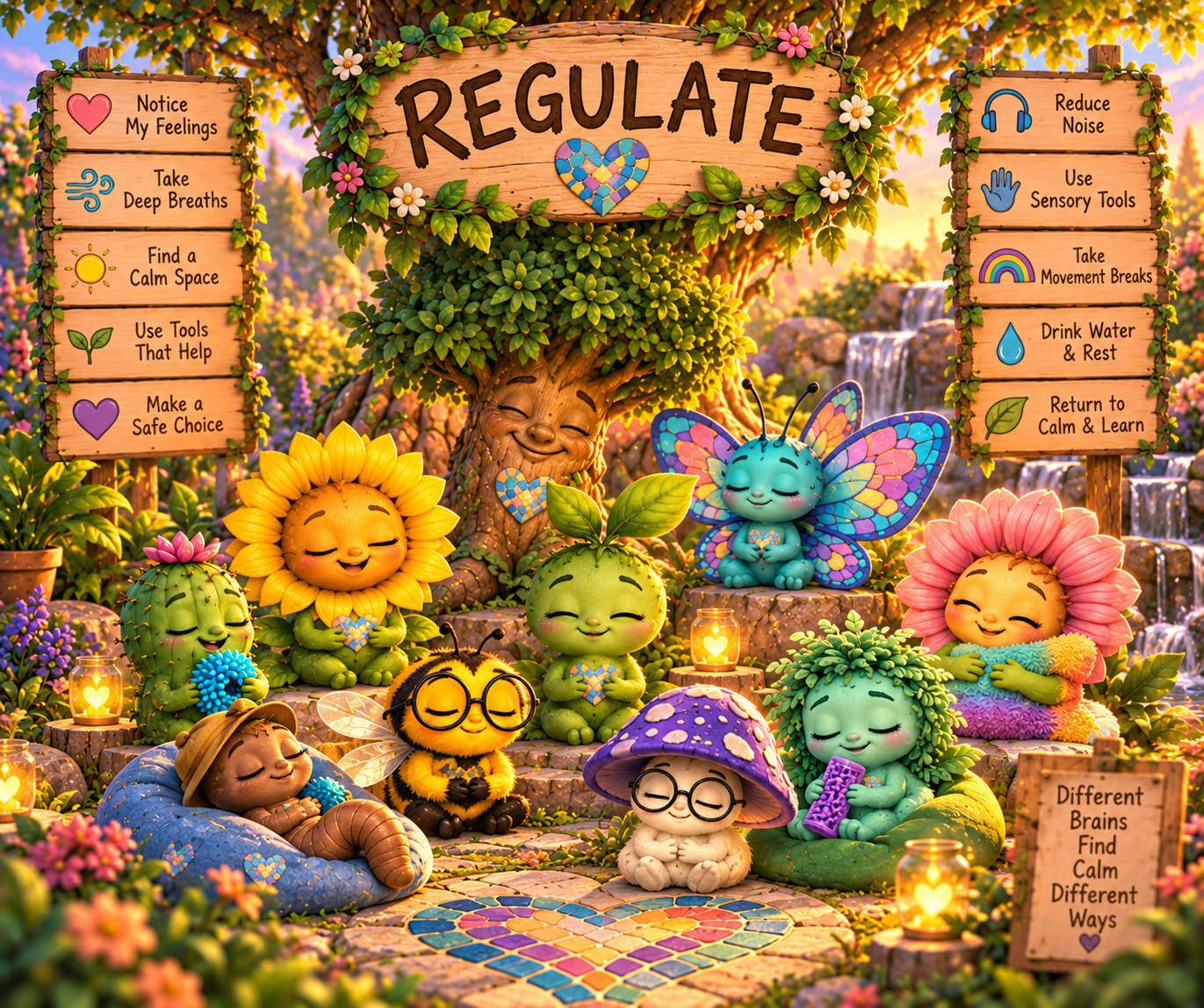
Teach
More ways to understand. More opportunities to grow.
Learning can begin with a picture, a story, a demonstration, or a chance to practice.
MoZaiX connects accessible information with practical teaching so people and the adults supporting them know how to use the tools.
Visual Communication & Products
Visual resources can make experiences more predictable and provide additional ways to express needs.
Ask about:
Visual schedules and daily routines.
Choice boards and communication supports.
Personalized social narratives.
Appointment and activity preparation.
Step-by-step task guides.
Resources for requesting help, space, or a pause.
We consider who will use the resource, where it will be available, and how it will be introduced. Tools should reflect the person’s age, preferences, and communication needs.
Training & Educational Media
We welcome training conversations with families, educators, healthcare teams, first responders, and community organizations.
Topics may include:
Using visual supports in daily practice.
Making communication clearer and more accessible.
Recognizing environmental barriers.
Supporting transitions and responding to distress.
Practicing accessible interactions through examples and scenarios.
Training connects understanding with actions people can use in their own setting.
The MoZaiX Garden
Our Garden Friends give stories and learning tools a familiar world to return to.
Their themes include feelings, boundaries, creativity, organization, change, confidence, and belonging. Character-based materials are one option; resources can also have a simpler appearance suited to older learners and professional settings.
Garden guides: Sprout, the Learner; Blossom, the Creative One; Mylo, the Quiet Thinker; and Bumble, the Busy Helper.

Growing Toward ReWired
MoZaiX: ReWired is our developing education vision, connecting academics with creativity, communication, outdoor experiences, and practical life skills.
It begins with our homeschool work. Broader educational programs will be shared as they become ready.
Navigate
Prepare for the experience. Find your next step.
School meetings, appointments, and community interactions can bring unfamiliar language, expectations, and decisions.
We help families organize their concerns and help organizations explore more accessible ways to serve the people entering their spaces.
Advocacy & Navigation
Families can ask about support with:
Organizing school records and identifying questions.
Preparing for IEP and other special education meetings.
Communicating concerns, priorities, and requested supports.
Understanding information shared by an educational team.
Tracking decisions, responsibilities, and follow-up steps.
Our goal is informed participation and clearer communication. Educational advocacy does not include legal representation.
Community Accessibility & Toolkits
MoZaiX is developing toolkit and training partnerships for:
Medical and dental practices.
Police departments.
Fire and rescue teams.
Social service organizations.
Salons and other community businesses.
A toolkit may combine preparation materials, picture-based communication, environmental suggestions, and staff learning.
A partnership can begin with one common barrier and a small pilot shaped with the people and professionals who use the setting.
What could this look like?
For a dental practice, a pilot might explore a visit-preview sequence, a way to communicate discomfort or request a pause, and staff practice using those supports.
For a family preparing for a school meeting, the starting point might be an organized list of concerns, relevant records, and questions about progress.
Familiar Support Across Settings
Our vision is to make useful supports more recognizable across home, school, healthcare, and community life—with the person’s permission and participation.
Garden guides: Flutter, the Transformer, and Wiggles, the Hard Worker.